delhi crosses 10000 ev charging points milestone
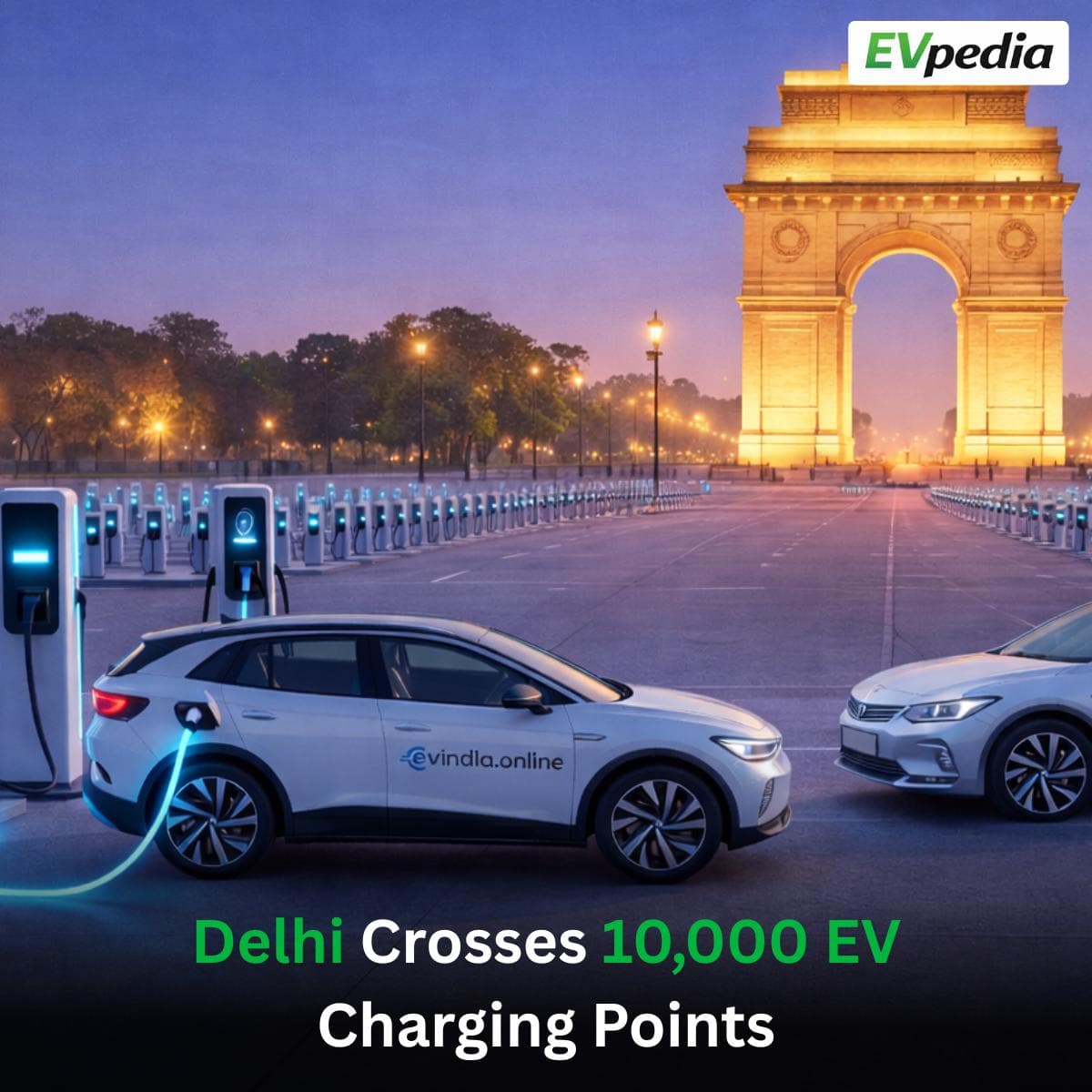
In a landmark achievement for India’s green mobility mission, the National Capital has officially crossed the 10,000 electric vehicle (EV) charging point milestone. This record-breaking expansion, announced in April 2026, solidifies Delhi’s position as the clear leader in EV infrastructure, now accounting for 24.1% of India’s total electricity consumption for public EV charging. The "Record" Expansion of 2026 The surge in infrastructure is not just a gradual increase but a rapid acceleration. According to Delhi Power Minister Ashish Sood, over 3,000 charging points were added in just the last few months alone. This speed is attributed to the clarity provided by the Draft EV Policy 2026–2030, which prioritizes infrastructure density to keep pace with the city's goal of 100% electrification in specific segments by 2030. Infrastructure by the Numbers The growth of Delhi’s network is built on a diverse "mix" of charging types, ensuring that range anxiety is minimized for every type of user—from daily office commuters to long-haul delivery fleets. Private Charging (49%): Nearly half of the city's network is concentrated in Residential Welfare Associations (RWAs) and group housing societies. The government’s mandate for "EV-ready" buildings, requiring 20% of parking spaces to have power conduits, has been a major driver here. Public Infrastructure (44%): Public charging stations remain the backbone for on-the-go charging, strategically placed at malls, metro stations, and commercial hubs. Battery Swapping (5%): Swapping stations are carving out a niche, particularly for the commercial three-wheeler and delivery segments, where two-minute "refueling" is critical for operational efficiency. The Power Demand Shift The rapid adoption of EVs is reflected in the city’s power grid. In areas managed by major discoms, the charging load has surged from just 24 MW in 2018 to over 227 MW today—a staggering nine-fold increase. Experts project this load will hit 375 MW by 2028 as the city implements its plan to bar new petrol two-wheeler registrations starting April 1, 2028. Strategic Roadmap: What’s Next for Delhi? Delhi’s ambition doesn't stop at 10,000. The government and power department are already working to strengthen the transmission and distribution grid to support the next wave of growth. 3,000+ New Stations: A target has been set to add at least 3,000 more public charging stations in the upcoming year. Focus on "Gray Spots": Regions like Bawana, Narela, and Kirari have been identified as future growth hubs to ensure equitable access across the entire NCT. Policy Mandates: With the 2027 deadline for exclusively electric three-wheeler registrations approaching, the focus is shifting toward high-capacity hubs that can support rapid commercial turnover. As Delhi moves toward its vision of a "Viksit Delhi," the availability of reliable, high-speed charging infrastructure remains the single most important catalyst. By crossing the 10,000-point mark, the city has set a national benchmark for how policy clarity and private-public execution can transform urban mobility. LinkedIn Post (Optimized for Impressions) Delhi isn’t just participating in the EV race—it’s officially setting the pace. 10,000+ charging points and counting! 🏁🏙️ The National Capital has hit a massive milestone, crossing 10k charging points this month. But the real story isn't just the number—it's the velocity. Over 3,000 of these points were added in just the last 90 days. Why this matters for the EV industry: Market Share: Delhi now consumes 24.1% of all EV charging power in India. 🔋 The Grid Shift: Charging load has surged 9x since 2018, hitting 227 MW today. 📈 Balanced Growth: A healthy mix of 49% private (homes/RWAs) and 44% public chargers is killing "range anxiety" for good. ✅ Upcoming Mandates: With petrol 2W registrations ending in 2028, the infrastructure is being built before the surge hits. 🛠️ This is a masterclass in how policy clarity (Delhi EV Policy 2026-30) triggers rapid infrastructure deployment.