IIT Roorkee Partners With Cathion Energy to Commercialise Lithium Ion Battery Technologies
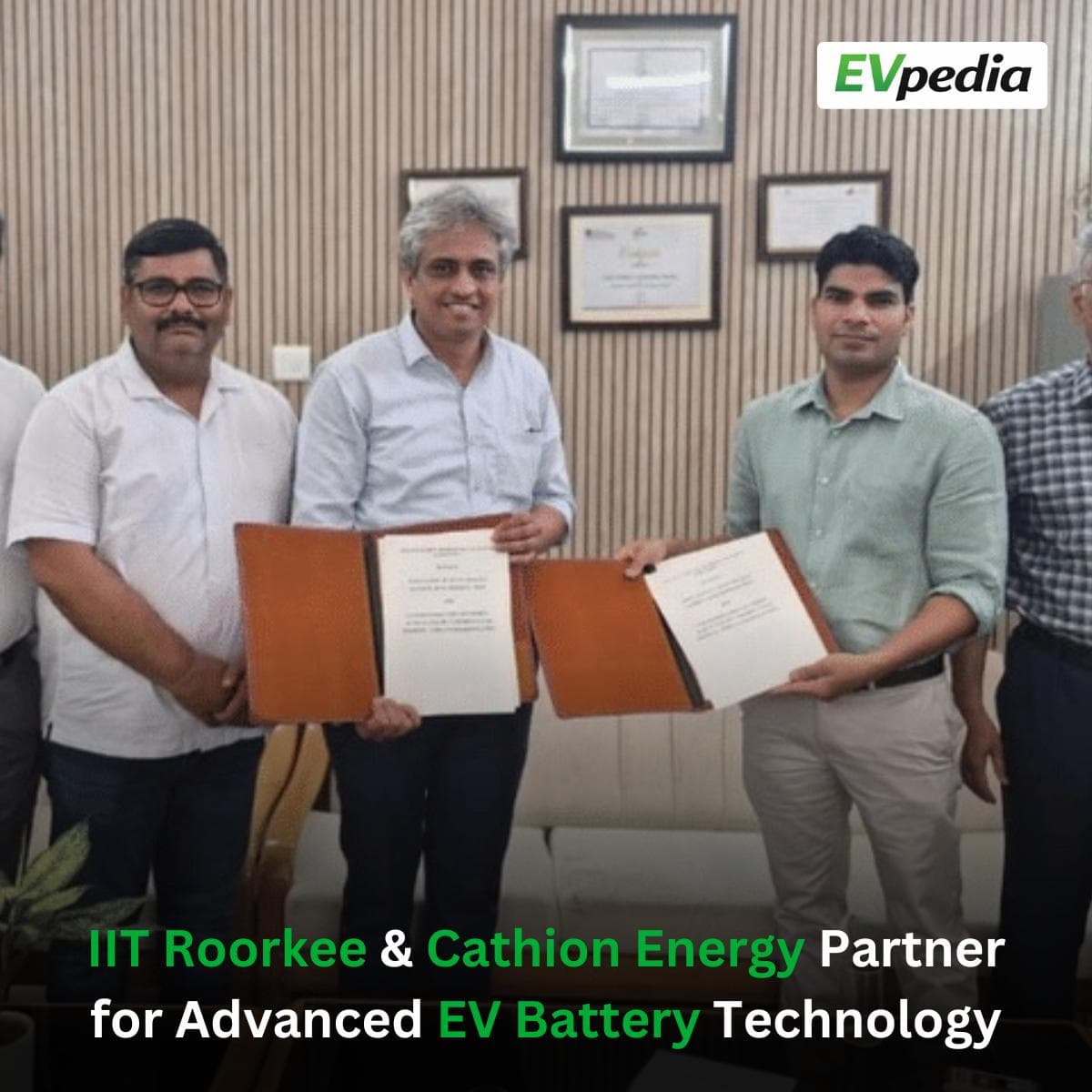
In a monumental development for India's advancing energy storage sector and electric vehicle ecosystem, the Indian Institute of Technology (IIT) Roorkee has finalized two technology transfer agreements with deep-tech startup Cathion Energy Private Limited. The agreements mark a major industrial blueprint to commercialise cutting-edge, indigenously researched lithium-ion battery electrode technologies designed to significantly enhance charging capabilities and efficiency.
The strategic collaboration arrives at a critical juncture as national demand for high-performance green commercial fleets, portable consumer electronics, and grid-scale renewable energy storage systems continues to escalate. The commercialization roadmap aligns with India's clean energy mandates and efforts to lower localized dependencies on component imports.
Redefining Battery Speed and Performance Matrix
The breakthrough innovations address one of the most critical engineering bottlenecks currently dogging the domestic battery market: the persistent compromise between energy density and power density. While existing commercial cells available in India are heavily optimized for sustaining energy density (which governs overall driving range), they often trade off power density, leading to prolonged charging cycles.
Developed at the institute by Professor Anjan Sil from the Department of Metallurgical and Materials Engineering, the new electrode technologies utilize a specialized oxide-based composite material. This material composition enables battery packs to maintain high energy levels while significantly scaling up power delivery, facilitating rapid energy replenishment.
According to Professor Sil, adapting this technology could theoretically compress conventional battery recharging durations from an hour down to less than ten minutes, resolving a significant hurdle for performance EV applications and commercial fleet uptimes.
Dual-Patent Industrial Licensing
The formal pact covers the transfer of two independent patents engineered to transform electrochemical efficiency:
"A Novel Electrode Composite for High Power and High Energy Application in Rechargeable Lithium-ion Battery"
"A High-Performance Composite Electrode for Li-ion Battery"
The licensing process was seamlessly structured and facilitated by the intellectual property rights cell of the institute's Sponsored Research and Industrial Consultancy unit.
Securing Local Supply Chains and Energy Mandates
Commenting on the transfer milestone, Professor Anjan Sil emphasized that translating foundational lab research into scalable industrial assets is vital to solving real-world transportation and power storage challenges. Dr. Hari Raj, CEO of Cathion Energy Private Limited, echoed this sentiment, stating that these advanced innovations hold massive commercial potential to optimize active battery efficiency and provide a robust technical foundation for India’s rapidly evolving green mobility landscape.
By feeding indigenously researched electrode technologies directly into localized assembly lines, the venture aims to lower overall production costs for battery cells built within India. Ultimately, this transition from laboratory-scale validation into scaled, commercial-grade production acts as a cornerstone in building an independent, self-reliant, and volatile-insulated EV manufacturing footprint across the country.