Tata AutoComp Partners With Jahwa Electronics for EV Component Manufacturing
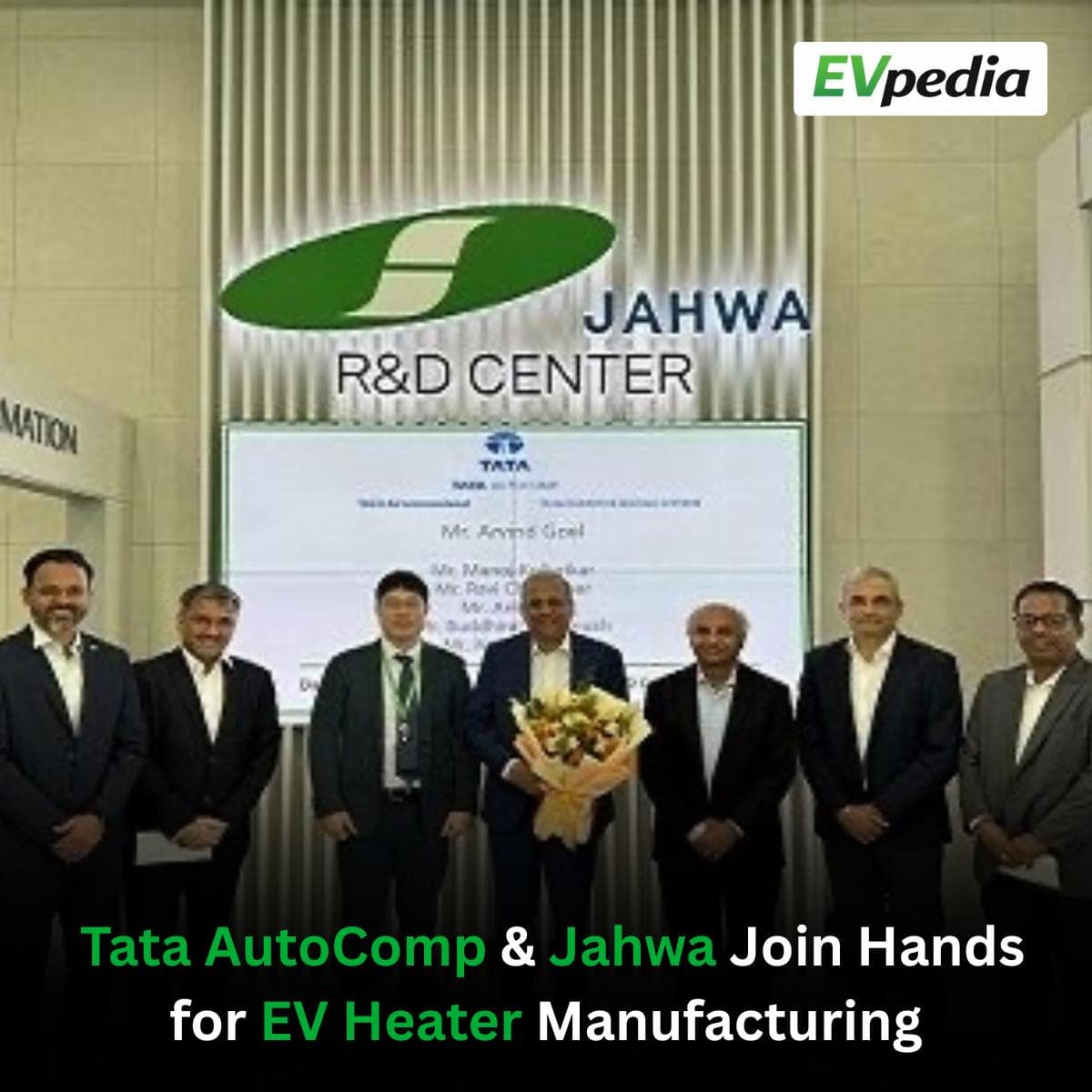
Pune: In an operational move aimed at accelerating component localization and strengthening the domestic electric vehicle supply chain, Indian automotive components giant Tata AutoComp Systems Limited has announced a strategic joint venture with South Korea-based Jahwa Electronics. The collaboration will explicitly focus on the localized production and supply of advanced thermal management systems optimized for electric and hybrid vehicles in India.
The agreement marks another critical milestone in building independent, technology-led manufacturing architectures within India’s fast-expanding automotive sector. By establishing this facility, the partnership intends to capitalize on the rapid electrification push being driven by both domestic automakers and global original equipment manufacturers (OEMs).
Advanced Thermal Engineering for Next-Gen Clean Mobility
The upcoming joint venture facility will manufacture both low-voltage and high-voltage Positive Temperature Coefficient (PTC) heaters. These highly specialized components are vital for temperature management applications inside electrified vehicle platforms. Unlike traditional internal combustion engine (ICE) passenger cars, electric vehicles cannot rely on waste engine heat to regulate temperature. Consequently, advanced PTC heaters play a crucial role in managing cabin heating and overall thermal efficiency, directly influencing cabin comfort and real-world battery efficiency under varying environmental conditions.
The technical synergy combines Jahwa Electronics’ deep-rooted expertise in precision electronic components, thermal technologies, and unique magnetic materials with Tata AutoComp’s expansive domestic manufacturing ecosystem and vast supply chain capabilities. Bringing this production closer to end-customers is intended to lower overall part import dependency while giving vehicle assembly lines swift access to technology-driven components.
Strategic Leadership Perspectives
Commenting on the development, Chanyong Kim, Chief Executive Officer of Jahwa Electronics, stated that India’s electric and hybrid vehicle markets are expanding exponentially as domestic and international car manufacturers scale up investments. He noted that this marks a critical juncture for the South Korean firm to establish a firm market entry foundation as a key supplier of low- and high-voltage PTC units. Kim added that partnering with the Tata Group, given its formidable market influence, business scale, and high corporate credibility, ensures a highly stable foothold to drive sustainable regional growth.
In tandem, Arvind Goel, Vice Chairman of Tata AutoComp Systems, expressed strong confidence that the collaboration with Jahwa Electronics, a globally recognized leader in specialty electronic elements, will introduce sustainable and innovative solutions to India’s evolving automotive landscape.
Shifting India’s Role in the Global EV Supply Chain
The joint venture aligns smoothly with the Central Government’s broader clean-energy mandates and the Make in India industrial program. As domestic passenger and commercial vehicle segments transition toward battery-powered configurations, the volume demand for specialized subsystems like battery cooling, electric drivetrains, and smart thermal solutions is expanding rapidly.
Expanding the Multi-Segment EV Portfolio
Tata AutoComp has been aggressively expanding its dedicated EV-focused division, which currently supplies battery packs, drivetrains, and cooling systems across multiple vehicle classes. The integration of Jahwa’s electronic component expertise adds a critical layer to its localized tier-1 capability.
Mitigating Macro Supply Chain Risks
By localizing high-value sub-assemblies such as PTC heaters, the partnership provides domestic car companies with volatile-insulated component sourcing options. Industry analysts believe that establishing this localized supply framework will effectively insulate the regional market from international trade bottlenecks, ultimately boosting cost competitiveness and positioning India as a primary strategic production and supply hub for the global EV sector.