Omega Seiki Partners with Honda to Deploy Mega Battery-Swapping Network
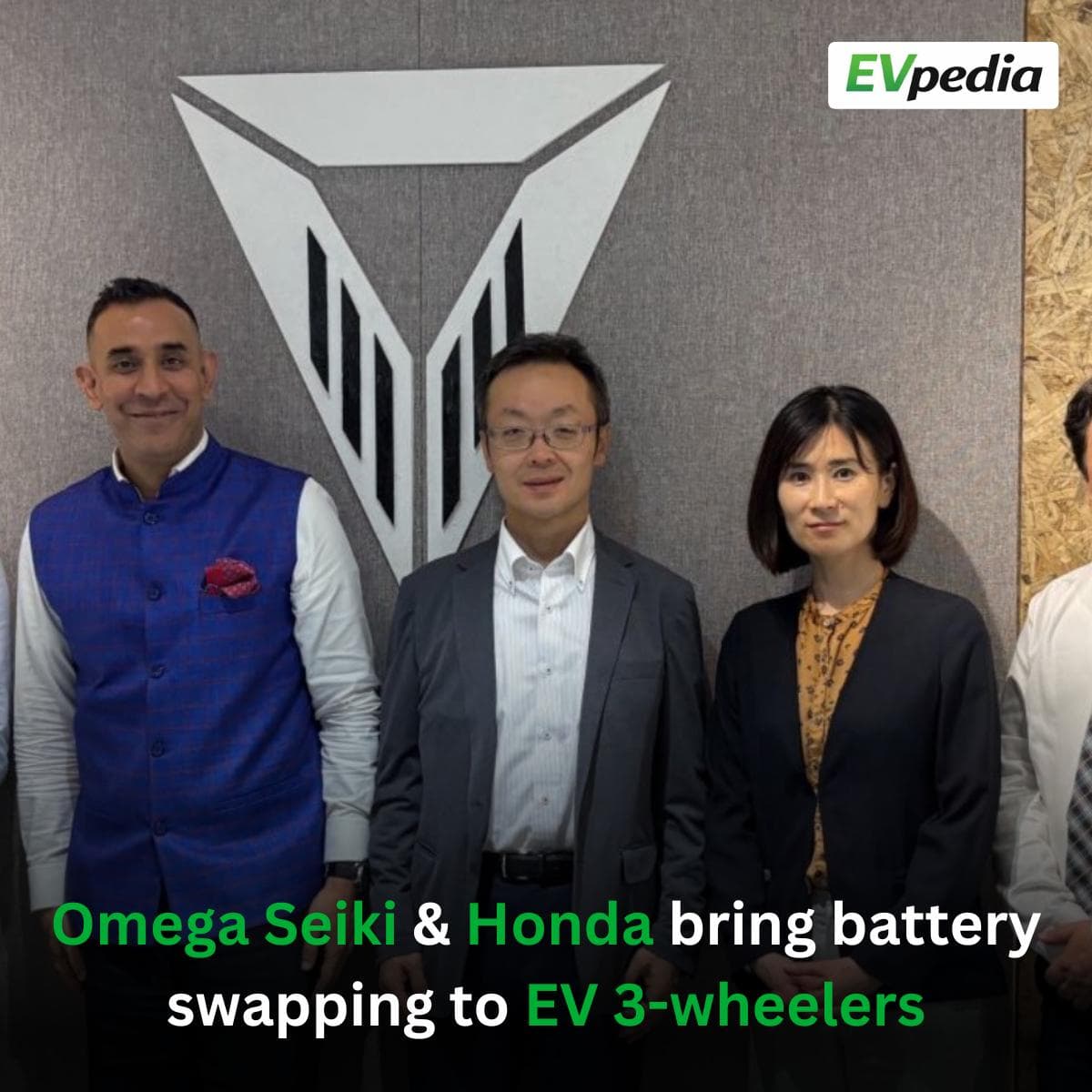
In a major development for India’s rapidly growing electric vehicle infrastructure, home-grown commercial electric vehicle manufacturer Omega Seiki Mobility (OSM) has announced a strategic partnership with Honda Power Pack Energy India, a wholly owned subsidiary of Japan’s automotive giant Honda Motor Co., Ltd. The landmark arrangement is engineered to drastically reduce fleet charging downtime and improve the financial viability of last-mile logistics by rolling out a synchronized battery-swapping ecosystem across key Indian metropolitan corridors.
Under the terms of the comprehensive pact, Omega Seiki Mobility will integrate Honda's proprietary e:Swap battery technology directly into its flagship cargo electric three-wheeler model, the Rage+. The collaboration leverages the distinct strengths of both corporate entities—merging OSM’s well-entrenched domestic manufacturing presence and commercial fleet relationships with Honda’s globally validated engineering expertise in power electronics and connected energy networks.
Building a Dense Urban Swap Matrix
Recognizing that physical infrastructure density is the ultimate catalyst to eliminate operational range anxiety, Honda Power Pack Energy has detailed an aggressive capital blueprint to deploy a large-scale network of quick interchange stations. The initial infrastructure roll-out centers heavily on India's dense economic corridors, with targeted deployments of 250 automated battery swapping stations in Bengaluru, 150 stations in New Delhi, and 100 stations across Mumbai.
To achieve extensive inter-city connectivity and convenient urban positioning, Honda has forged multi-sector collaborations to strategically locate its specialized automated battery exchangers (Honda Power Pack Exchanger e:). The swapping points are being rapidly set up alongside mainstream infrastructure backbones, utilizing the real estate and retail footprints of the Hindustan Petroleum Corporation Limited (HPCL) fuel stations, Delhi Metro Rail Corporation (DMRC) networks, Bangalore Metro Rail Corporation (BMRC) lines, Adani Electricity Mumbai zones, and authorized Honda Motorcycle and Scooter India (HMSI) dealerships.
Disrupting the Total Cost of Ownership
The integration of a standardized battery-swapping model brings a profound economic shift to the commercial electric three-wheeler segment. Historically, advanced lithium-ion battery packs have accounted for nearly 40% of an electric vehicle's total production cost. By utilizing an "Energy-as-a-Service" subscription model through Honda's network, OSM can successfully decouple the vehicle chassis from the battery cost.
This structural separation drives down the upfront acquisition price of the OSM Rage+ from its standard retail range of ₹3,30,000–₹3,50,000 to a highly competitive price bracket of approximately ₹2,20,000–₹2,30,000. This immediate 30% reduction in capital expenditure represents a massive lower entry barrier for fleet operators, small business owners, and gig economy delivery drivers. Furthermore, the model insulates buyers from long-term asset degradation, shifting battery performance liabilities and lifecycle replacement management entirely onto the infrastructure provider.
Driving Operational Uptime and Efficiency
Commenting on the historic alliance, Uday Narang, Founder and Chairman of Omega Seiki Mobility, emphasized that optimizing real-world asset utilization remains the key metric for commercial transport. "For a commercial vehicle operator, uptime is everything," Narang stated. "Every minute spent waiting at a plug-in charger is a missed financial opportunity. With battery swapping, operators can exchange power packs within minutes and get right back onto the road, ensuring higher vehicle utilization, greater flexibility, and vastly improved daily earnings."
Narang anticipates that the long-term operational benefits will prompt roughly 30% to 40% of the domestic commercial vehicle market to move heavily toward swappable battery formats. To further mitigate residual asset risk and attract corporate logistics conglomerates, OSM is planning to introduce a structured residual value framework for its vehicles, boosting investor confidence in the secondary second-hand EV resale market.
The partnership mirrors a broader macroeconomic shift across India’s clean tech landscape, closely aligning with national green mobility mandates that seek to convert up to 80% of commercial and three-wheeled transport into zero-emission platforms. By connecting a reliable vehicle platform like the Rage+ with an interconnected, cloud-managed energy matrix, Omega Seiki and Honda are shifting battery swapping from localized pilot phases into large-scale, commercial-grade realities.